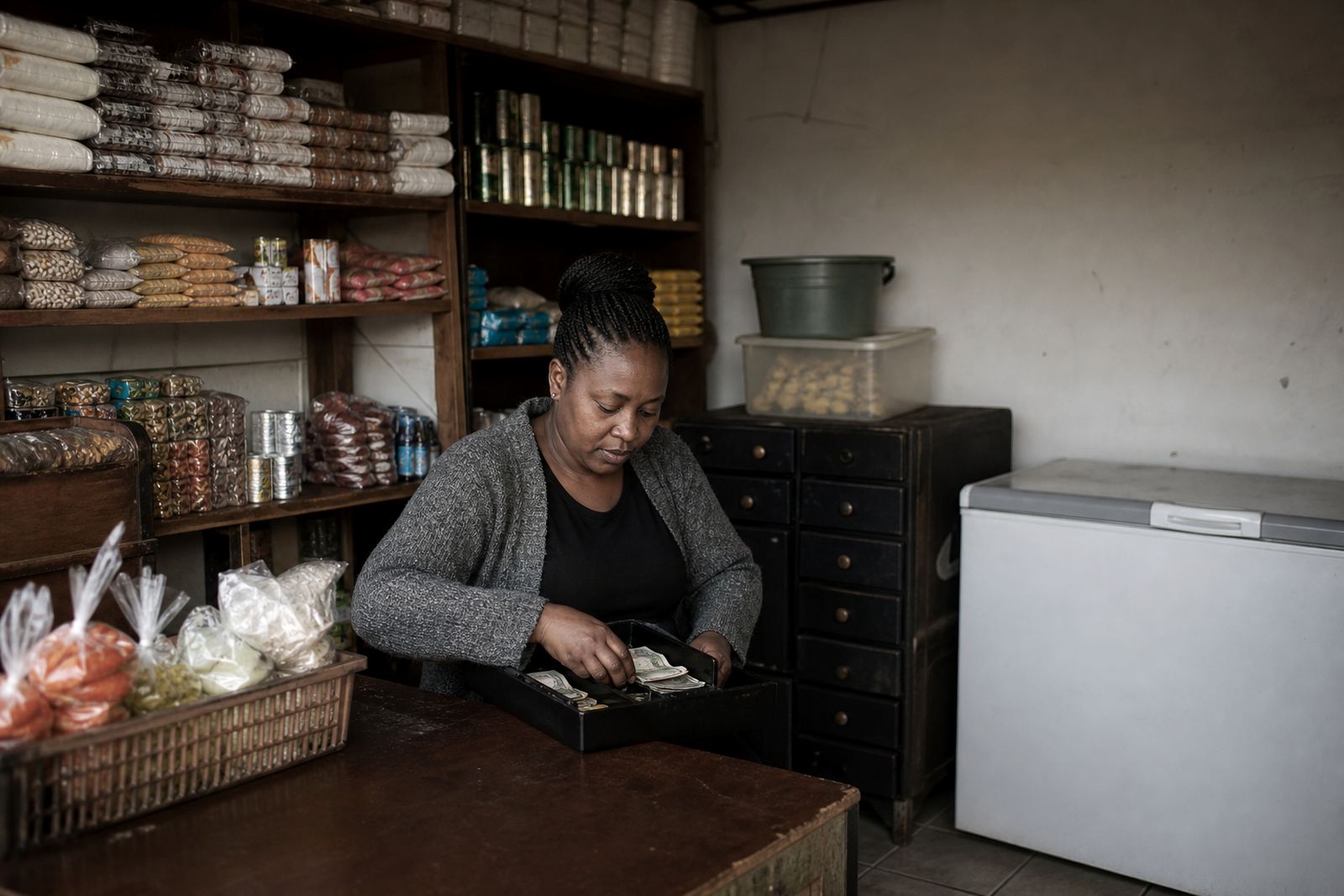
The brief from a busy Soweto trader
The client was a small spaza-style convenience trader in Soweto serving walk-in shoppers, school kids and nearby households. The owner was doing everything from buying stock to counting cash at night, and the books were falling behind each week.
The brief was simple enough to say, but messy in practice. They needed daily sales records, cleaner supplier tracking, payroll for a small team and a way to see what stock was moving without guessing. The owner wanted something affordable, easy to follow and steady enough to keep up with township trading hours.
- Client type: micro business convenience trader
- Location: Soweto, Gauteng
- Business size: small owner-managed shop with a few staff members
- Main pain point: paper records and untracked cash movement
What was getting in the way
The shop worked on tight margins and cash moved quickly. Trading was busiest in the morning and late afternoon, so there was little time for admin during the day. Load-shedding also made the routine less predictable because the owner could not always rely on the same closing time or the same stock count every evening.
Another issue was that stock was being bought in mixed quantities from different suppliers, then written down in different notebooks. Some wage notes were on paper, some on the phone, and some were only in memory. That made it hard to check if the business was actually making money on a week-to-week basis, and it created stress when staff asked about pay or leave.
- Mixed cash and stock notes across several books
- No fixed payroll routine for a small team
- Closing stock was not counted the same way every day
- Records were difficult to use when suppliers or staff queried amounts
The setup we put in place
Affo put in a stripped-back system that matched the size of the business. We created a weekly bookkeeping rhythm, set up payroll for the staff who needed regular pay, and built simple daily record habits around opening stock, sales, and cash-up figures. The aim was not to complicate the shop, but to make the numbers easier to keep and easier to trust.
We also helped the owner separate trading records from personal spending. That alone made a noticeable difference because the cash in hand at the end of the day started to match the sales pattern much more closely. The owner did not need a full office setup or extra admin time, just a clear routine and a proper process that could be followed after a long day on the floor.
- Daily sales and cash-up tracking
- Supplier and stock record cleaning
- Weekly wage payroll for staff
- Payslip processing and leave tracking
- Basic payroll reporting for the owner
How the work was delivered
The project took 5 weeks from first review to settled monthly handover. In week 1 we mapped how the shop traded, what was already being recorded and where the gaps were. In week 2 we cleaned up the stock and payroll information. By week 3 the owner had a clearer daily capture method and the payroll cycle was running on a fixed timetable.
In weeks 4 and 5 we refined the reporting, checked leave balances and made sure the owner could see the difference between wages, supplier payments and daily takings. The process was deliberately practical. We used short weekly check-ins, kept the capture fields simple and made sure the owner could continue with the same system even when the shop was busy or there was load-shedding.
- Project timeline: 5 weeks
- Check-in rhythm: weekly
- Focus: stock clarity, cash control and payroll order
- Suitable for: micro businesses with limited admin time
Results the owner could see quickly
By the end of the project, the owner had a cleaner picture of daily takings and better control over wage payments. Stock loss was easier to spot because the counts were being done in a consistent way. Payroll queries from staff dropped because payslips and pay dates were no longer handled ad hoc.
The business also became easier to run from week to week. Instead of guessing which items were profitable, the owner could see which products moved fastest and which lines needed tighter buying. That made purchasing more disciplined, and it reduced the late-night admin that had been piling up for months. The owner said the biggest change was not some fancy system, but knowing where the money was going.
- Cleaner daily cash control
- More reliable wage processing
- Better stock visibility
- Less time spent correcting records after trading hours
What we would do again for a township trader
We would use the same approach again for any micro trader who needs order without extra overheads. Start with the basics, keep the routine short, and make sure the owner can keep using it when the shop is busy. That matters more than adding layers of admin the team will not keep up with.
For a Soweto spaza or a similar township shop, we would again prioritise daily sales capture, stock movement, wage timing and simple reporting. If the business grows into more branches or hires more staff later, the records are already in a shape that can carry that growth. It is a practical base, and it works well when time is tight and margins are thin.
- Best fit: owners who need practical bookkeeping, not paperwork for its own sake
- Works well with: small teams, cash sales and uneven trading hours
- Strongest benefit: consistent records that support better day-to-day decisions
Key facts
| Project type | Bookkeeping and payroll support for a township convenience trader |
|---|---|
| Town | Soweto, Johannesburg |
| Timeline | 5 weeks |
| Key services | Monthly Payroll, Weekly Wage Payroll, Payslip Processing, Leave Tracking, Payroll Reporting |
| Business size | Micro business with a small staff team |
| Base office | Bryanston, Johannesburg |