

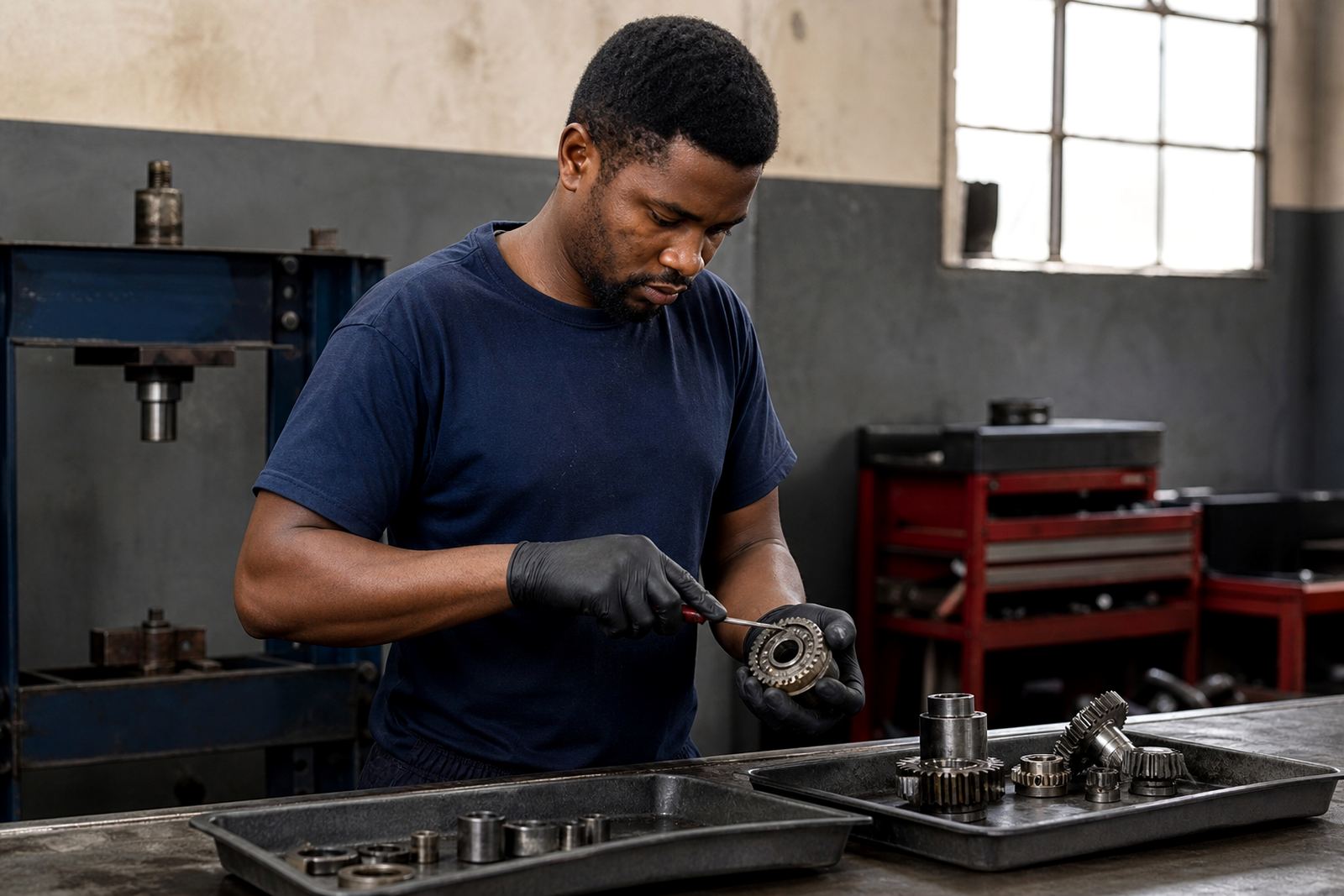
What the Walmer workshop needed
The client was a small repair shop in Walmer, Gqeberha handling mixed jobs for local customers and business accounts. The team was busy on the floor but admin was slipping, especially when parts were bought in a hurry and job cards were not completed in full.
The brief was simple: capture labour, parts and customer details properly, then make sure every job could be traced from intake to handover. They also wanted less time spent searching through slips, WhatsApp messages and loose notes at month end.
- Town: Walmer, Gqeberha
- Client type: micro repair business with a small on-site team
- Main pain points: job card gaps, parts cost leakage, late admin capture
- Priority: better monthly reporting without adding heavy admin
Constraints on a busy small workshop
The shop could not afford a long shutdown or a complicated system that needed days of training. Staff were working around walk-ins, supplier collections and customer calls, so any process had to fit into the day without slowing repairs down. Coastal dust and humidity also meant paper records and loose files were never a great option.
There was also the reality of load-shedding. When power went off, the team still had to keep track of jobs, parts and deposits, so we had to keep the process light enough to work on paper first if needed, then sync it into the month-end records later. A few missed entries were already affecting margin and cash flow.
- Needed a process that works during load-shedding
- Required simple controls for parts bought from multiple suppliers
- Had to suit a small team, not a full finance department
- Needed clear handover steps for each completed repair
What we supplied and set up
We put in a cleaner bookkeeping flow built around job cards, supplier slips and weekly capture. Each repair job was given a unique reference, then linked to customer details, labour, parts used and payment status. That made it easier to see what had been quoted, what had been done, and what still needed to be billed.
We also helped standardise the way parts costs were recorded. Instead of leaving receipts in a box until month end, the workshop now captures them against the relevant job as soon as they come in. This reduced missed costs and gave the owner a better view of which jobs were profitable and which ones were eating into margin.
- Monthly bookkeeping support with weekly capture checks
- Job card structure for intake, labour, parts and completion
- Parts cost allocation against each repair reference
- Simple monthly reports for owner review and follow-up
How the workflow changed over 3 weeks
Week 1 was about mapping the existing process and finding where information was dropping out. We reviewed job intake, parts purchasing, customer deposits and final handover. Week 2 focused on the new capture layout, including how job cards were numbered and how supplier invoices were matched. By Week 3, the team was using the new process on live work and we were cleaning up the first batch of records.
The change did not require a full system replacement. It was more about tightening the routine and making sure every repair left a better paper trail. That kept disruption low and made it easier for the owner to keep using the process after the setup was complete.
- Timeline: 3 weeks from review to live use
- Training covered intake, parts capture and final billing checks
- Owner review points were built into the weekly cycle
- First month cleanup included missing slips and unmatched entries
Results the workshop could see quickly
Once the new process was in place, the owner had a clearer picture of job profitability and much less time spent chasing missing information. Parts were no longer drifting through the system without being linked to a job, and the team had a more reliable way to close out completed work. That made month-end less stressful and helped with pricing decisions on future repairs.
The shop also gained a better handle on customer follow-up. When a customer queried a repair, the team could check the job reference, see what parts had been used and confirm the status without searching through separate notebooks. It was a practical improvement, but a big one for a small business trying to keep admin under control.
- Cleaner job card records and better traceability
- Reduced missed parts costs and fewer incomplete entries
- Faster month-end checks and easier reporting
- Better visibility on margin per job
What we would do again for a similar shop
We would use the same approach again for any small repair business in Walmer, Gelvandale, Newton Park or elsewhere in Gqeberha where the team is doing real work and admin is squeezed into the gaps. Start with the actual workflow, keep the system simple, and make sure the owner can read the numbers without needing extra explanations every week.
If the business has staff doing different kinds of repairs or using parts from several suppliers, the key is to keep the job reference at the centre of everything. That one step makes bookkeeping, payroll input and reporting much easier to manage, especially where there is seasonal pressure or cash sales. A little structure goes a long way, and it saves hours later.
- Use one job reference from intake to final invoice
- Capture parts on the day they are used or bought
- Review open jobs every week, not only at month end
- Keep the process simple enough for the whole team to follow
Key facts
| Project type | Bookkeeping and admin process setup for a repair shop |
|---|---|
| Town | Walmer, Gqeberha |
| Timeline | 3 weeks |
| Main focus | Job card management and parts cost capture |
| Business size | Micro business with a small on-site team |
| Outcome | Cleaner reporting, better margin visibility, fewer missed costs |