

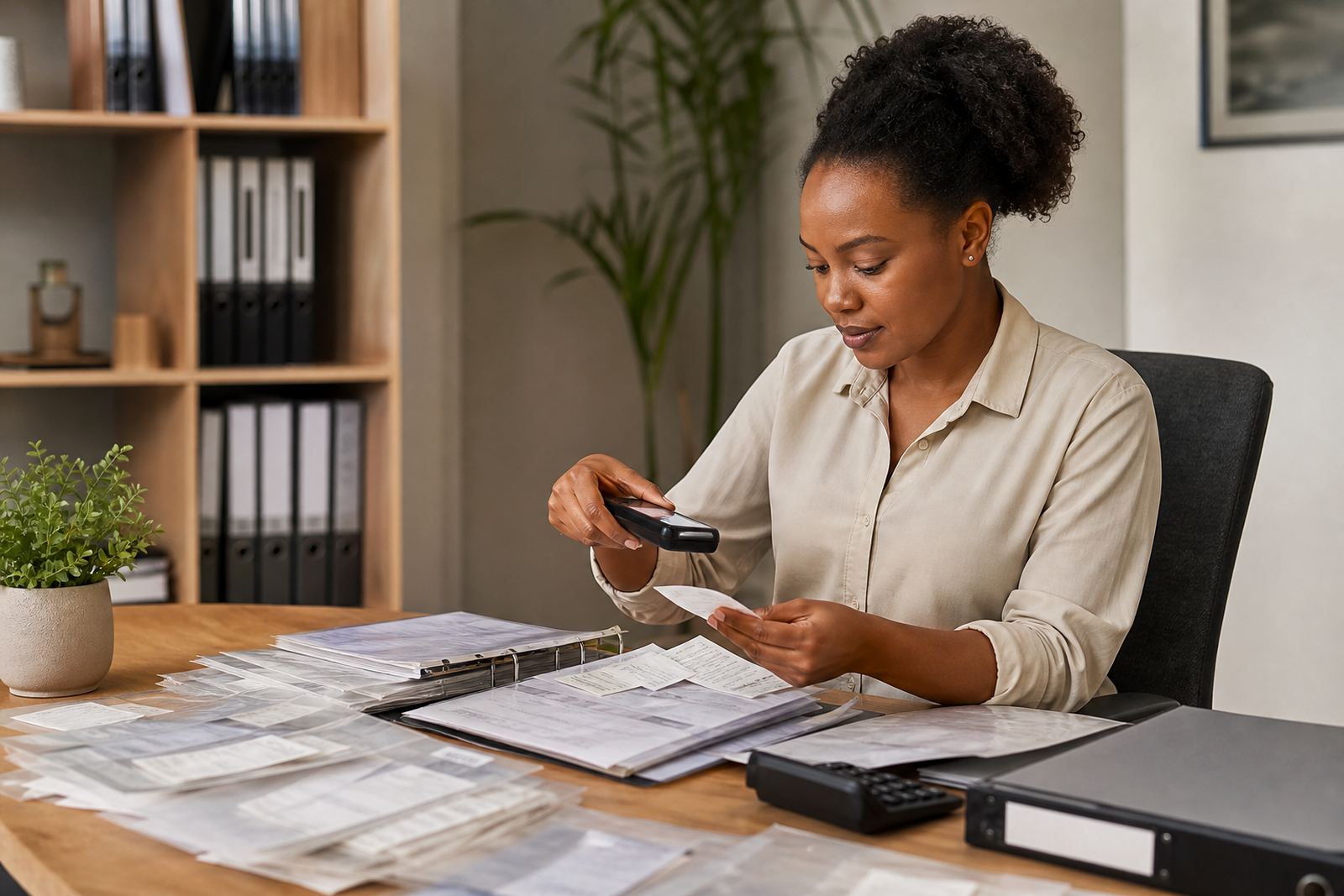
Start with one clear rule for every receipt
The easiest system is the one everyone can follow every day. Pick one rule for all receipts, whether they come from stationery runs in Sandton, fuel stops in Midrand or a supplier delivery in Cape Town. If a receipt must be captured, file it immediately in the same place every time.
Many small businesses lose track because paper is left in pockets, bags and bakkie cubbies until it fades or gets wet. In Johannesburg, that can happen fast during a rainstorm or a hectic day of client visits. A receipt that is not stored properly often becomes a guess later, and guesses slow down bookkeeping.
- Use one tray, folder or envelope for daily receipts
- Keep personal spending separate from business spending
- Write the date and purpose on the back if it is not obvious
- File receipts on the same day where possible
Separate paper slips from digital proof
Not every receipt arrives on paper. Some suppliers send PDF invoices, others send SMS payment confirmations, and some card machines print a small slip that is easy to lose. Keep digital and paper records in the same monthly order so nothing gets missed when it is time to capture transactions.
A good habit is to name digital files by date and supplier, for example 2026-03-14 office supplies. That makes searching quicker than scrolling through a phone gallery with hundreds of photos. If you use a cloud folder, create one folder per month and another inside it for payroll, expenses and supplier documents.
- Save PDFs in a monthly folder structure
- Photograph paper slips before the ink fades
- Keep card slips with the matching bank statement entry
- Back up files in at least two places
Use a receipt log for busy weeks
When business gets busy, receipts pile up very quickly. A simple receipt log helps you keep track before paperwork slips through the cracks. It can be a spreadsheet, a notebook or even a basic register, as long as it records the essentials.
For a small team in Bryanston or Randburg, the log can be checked once a week. That is enough to catch missing slips, follow up on outstanding proof of payment and match expenses to the correct job or month. It also helps when your payroll period lands in the same week as supplier payments, which is common in micro businesses with tight cash flow.
- Date of purchase
- Supplier name
- Amount paid
- What it was for
- Who bought it
Match receipts to the right expense category
Good storage is not only about keeping paper safe. It also means filing each receipt under the right category so your records are usable. Fuel, office supplies, wages, leave adjustments and bank charges should not all sit in one pile. Grouping them properly makes monthly payroll checks and bookkeeping cleanup much easier.
If you buy uniforms for a Durban team or pay for a printer repair in Pretoria, note the category at once. That way you do not have to revisit old files when the books need to be reconciled. Clear categories also help if your records need to be reviewed by your accountant or tax practitioner later on.
- Office and admin costs
- Travel and fuel
- Payroll related costs
- Repairs and maintenance
- Subscriptions and service fees
Protect receipts from heat, moisture and fading
South African conditions can be hard on paper. Coastal humidity in Gqeberha and Durban can make slips curl or stick together, while heat in a bakkie or glove box can fade thermal printing quickly. If a receipt is important, do not leave it in the sun or near moisture for long.
Use clear sleeves, envelopes or a closed file box and keep it off the floor where spills can reach it. A small fireproof box is worth considering for original records if you keep paper files at the office. During load-shedding, avoid leaving files near candles or open flames, because one accident can wipe out months of paperwork.
Digital copies help, but the original paper should still be stored neatly where it can be found. Even a minor typo on a slip can be checked if you still have the original on hand, which is far better than trying to piece it together later.
Build a monthly handover routine for bookkeeping
The best time to organise receipts is before month end, not after the bank statement arrives. Set a fixed handover day each month so all receipts, statements and payroll notes are passed over together. This keeps bookkeeping current and reduces backtracking when wages, leave or deductions need to be checked.
A simple monthly routine works well for micro businesses in Johannesburg, Pretoria and across the country. Once the receipts are sorted, your bookkeeping team can capture expenses faster and pick up missing documents early. That is especially useful if you run weekly wages, have casual workers or need holiday payroll cover when staff are away.
- Choose one handover date each month
- Check that all receipts have matching payments
- Flag missing slips before the next payroll run
- Keep a separate file for unresolved items
At Affo, we work with micro businesses that need practical systems, not complicated admin. If your receipts are already piling up, a few steady habits can make a big difference to how quickly your records are captured and how confidently you can run the business.