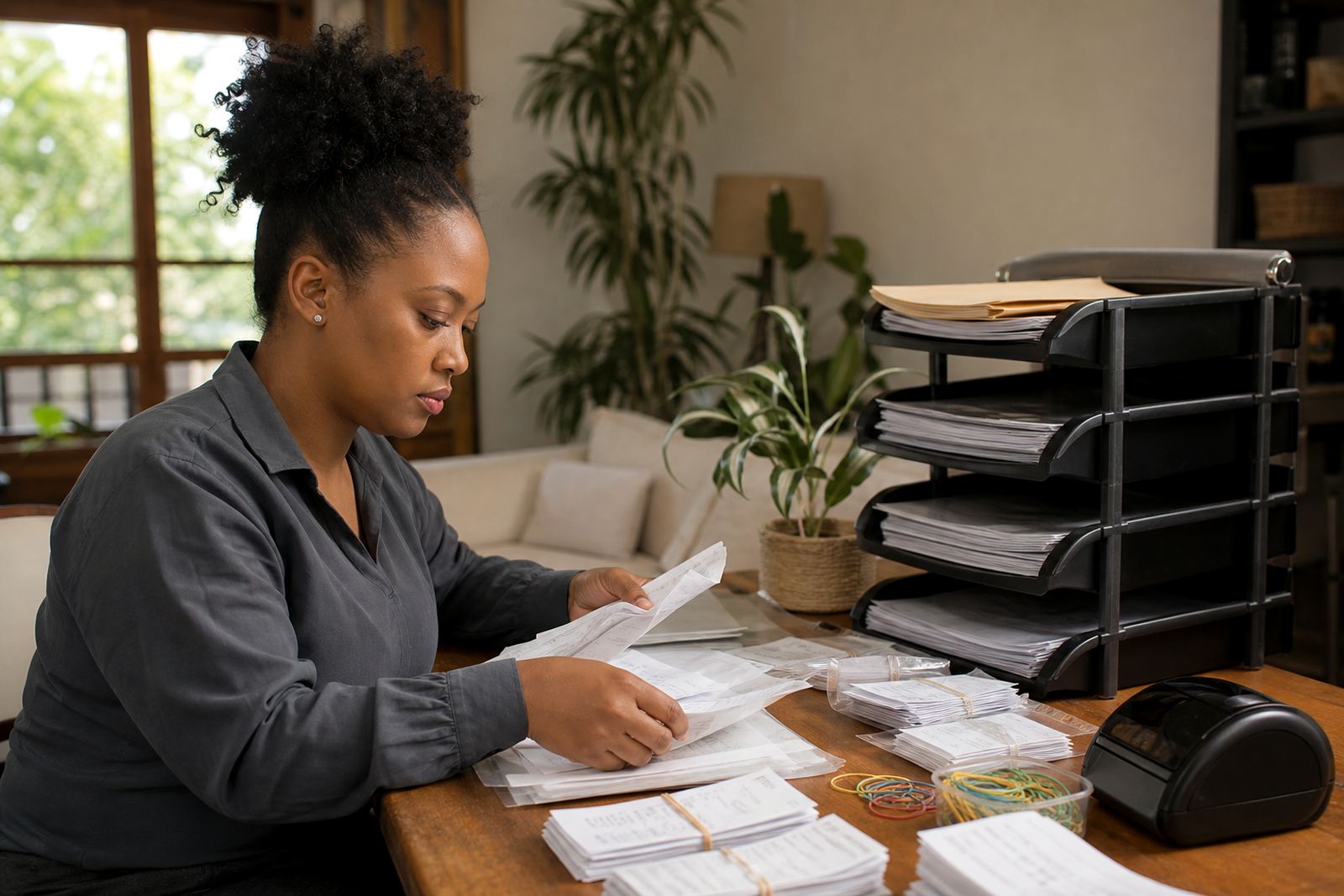


Start With a Simple Daily Record
Retail bookkeeping works best when the basics are captured every day, not left until month end. For a small shop, salon, spaza, takeaway or hardware counter, the first job is to record what came in, what went out, and what cash should be in the till. If those numbers are off, the rest of the books will be off too.
Keep one clear routine for sales, card payments, cash takings and supplier invoices. A short daily summary is usually enough for micro businesses, provided it is done properly and kept in order. In busy trading weeks, especially around month end or public holidays, that little bit of discipline saves hours later.
- Record total cash sales for the day
- Record card and EFT sales separately
- Keep supplier invoices in date order
- Note refunds, voids and discounts given
- File slips or proof of payment the same day
Many small retailers in Johannesburg, Pretoria and Cape Town run on tight margins, so every rand has to be traceable. A simple logbook, spreadsheet or cloud record can work well if it is completed consistently.
Do a Proper Cash-Up Every Trading Day
The cash-up is where problems show up first. Count the cash in the till, check card totals against the payment batch, and compare both against the sales record. If you sell items with mixed VAT treatment or use manual discounting, make sure those figures are separated clearly. A quick count is not enough. Count slowly, note the difference and find the reason before closing for the night.
For shops with more than one cashier, each drawer should be counted separately. If one person opens and another closes, handover notes matter. In places where load-shedding interrupts trading, it helps to write down the time systems went off and came back on, because that can explain gaps in card receipts or till rolls.
- Count cash, cards and EFTs against the sales total
- Check for shortfalls and overages
- Separate staff purchases from normal sales
- Note machine failures, power cuts or printer issues
- Store the day’s till slip with the cash-up sheet
A clean cash-up habit protects the business and the staff. It also makes it easier to spot theft, pricing errors or missing entries before they become a bigger problem.
Track Stock the Way Small Retailers Actually Trade
Stock is often where the money sits in a retail business, so it needs regular attention. Start with a stock list that shows the item name, unit cost, selling price and quantity on hand. If you buy in cartons, bags or packs, keep the unit measure the same across the list so the numbers make sense. That stops confusion when orders are compared with what is actually on the shelf.
Do a weekly check on fast-moving items and a monthly count on the full range. If you trade in fresh goods, cigarette stock, cosmetics, stationery or household items, count the high-value or fast-selling lines more often. Coastal humidity in Durban or Gqeberha can affect some products, so damaged stock should be written off clearly rather than left in the count as if it can still sell.
- Count opening stock, purchases and closing stock
- Write down damaged, expired or stolen items
- Compare physical counts with supplier delivery notes
- Keep separate records for sample stock and staff use
- Review slow-moving stock every month
When stock is tracked properly, the owner can see what is selling well and what is tying up cash. That helps with reordering, price changes and space planning in a small shop where every shelf has to earn its keep.
Use Basic Reports to See What Is Happening
Retail bookkeeping is not only about storing paperwork. The point is to use the numbers. A small business should at least know its daily sales, weekly gross profit and monthly expenses. That gives the owner a clearer view of whether the shop is actually making money or just moving stock.
A basic monthly report should show sales by payment type, purchases from suppliers, gross margin, wages, rent, transport and other operating costs. If payroll is part of the business, include those costs in the right month so the true trading position is visible. For micro businesses with small teams, even one missing payroll entry can distort the picture.
Good reporting does not need to be complicated. It needs to be consistent, readable and on time. That is especially useful for owners managing branches across Sandton, Randburg or Midrand, where a quick report can show which site is performing and which one needs attention.
- Sales by cash, card and EFT
- Monthly purchases and supplier balances
- Gross profit before overheads
- Wages, rent, power, delivery and security costs
- Closing stock and any write-offs
Keep Supplier, VAT and Payment Records in Order
Small retailers often lose track of supplier accounts because invoices come in by hand, by WhatsApp or with deliveries on busy mornings. Keep every supplier invoice together with proof of payment and delivery notes. If a supplier sends short deliveries or credits, file those records straight away so the month-end balance is not guessed.
If your business is VAT registered, the records need to be even more exact. Separate VAT-inclusive and VAT-exclusive amounts properly and keep tax invoices in date order. Mistakes here can cost money later, especially if the paperwork is not matched to the correct month. A small error in one purchase line can snowball into a bigger reporting problem.
For retailers paying suppliers on short terms, it helps to review outstanding balances every week. That keeps accounts current and helps avoid surprise shortages when the next order is due. In practical terms, the best system is the one that can be kept up even during a busy trading week.
A Monthly Checklist That Saves Time Later
Month-end is easier when the owner uses the same checklist each time. The aim is to close the books in a sensible order, with no missing slips and no unexplained differences. This also helps when you need to speak to a bookkeeper, payroll administrator or accountant because the records are already in shape.
- Reconcile cash, card and EFT totals
- Match supplier invoices to payments made
- Count closing stock and note differences
- Review wages, leave and any overtime paid
- Check rent, utilities, delivery and security costs
- File all slips, statements and reports for the month
If something does not balance, do not push it into the next month and hope it disappears. Find the reason while the month is still fresh. That habit keeps the books cleaner and makes decision-making easier for owners who need to watch every rand closely.
Affo works with micro businesses across South Africa from our Bryanston base, supporting owners who need practical bookkeeping and payroll help without the overheads of a large back office. With the right records in place, small retailers can spend less time chasing paperwork and more time serving customers.
When to Ask for Outside Help
Some retail owners can manage the day-to-day recordkeeping in-house, but there is a point where outside support becomes useful. If cash-ups keep drifting, stock counts never match, payroll is taking too long or month-end reports are always late, the business may need a steadier system. That is common in growing micro businesses, especially when the owner is also buying stock, serving customers and managing staff.
Outside bookkeeping support can help with monthly records, payroll runs, new employee setup, payslips, leave tracking and payroll cleanup. It is often easier to fix the system early than to sort out six months of mismatches later. For retailers trading in Johannesburg, Pretoria, Cape Town, Durban and Gqeberha, local pressure points are often the same: busy staff, tight margins and not enough time for admin.
If your records are kept up properly, the business becomes easier to run. You can see what is selling, what is costing too much and where the cash is going. That is the real value of good bookkeeping for a small retailer.